Surfing in New Zealand
New Zealand has 14 main surf areas. There are 2 surf spots . Go explore!


Overview of surfing in New Zealand
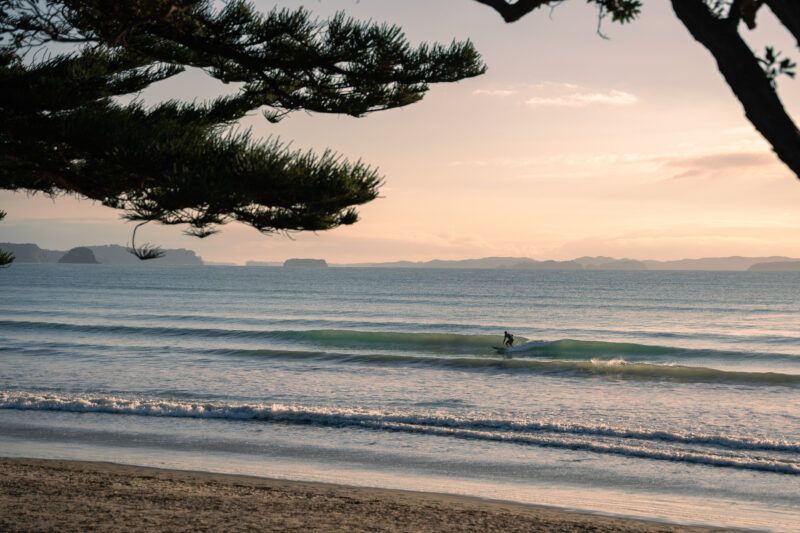 New Zealand is one of the most incredible, varied, and wildly beautiful surf destinations on Earth — a place where snow-capped mountains meet black-sand beaches, geothermal valleys open to perfect pointbreaks, and lush farmland runs all the way to rugged headlands battered by roaring Pacific swell. Split into two main islands, NZ offers staggering variety: heavy west coast beach breaks, long right-hand points, reef setups, volcanic cobblestones, playful summer peaks, icy southern slabs, and tropical-style bays in the far north. New Zealand is renowned for its world class waves and quality surf, attracting surfers from around the globe.
Surfing in New Zealand is shaped by location and weather. The country sits in the middle of the Pacific with swell wrapping in from every direction: long-period southern swells from Antarctica, cyclone swells from the Coral Sea, Tasman Sea storm pulses, and easterly wind swells that light up scenic bays. These conditions produce some of the best surf and quality waves found anywhere, making it a dream for surfers seeking top-tier experiences. The result is a coastline where you can surf two completely different oceans in the same day — raw west coast power in the morning, mellow east coast longboard waves in the afternoon.

The culture is tight-knit, humble, outdoorsy, respectful, and deeply connected to the land. Surfers wake to cold offshore winds, sip strong coffee, scan live cams, and drive long country highways lined with rolling hills, sheep, lakes, and cliffs. The backdrop always feels epic — misty headlands, native forests, volcanic rock, and untouched beaches.
Whether you’re chasing barrels, cruising on a longboard, hunting heavy pointbreaks, or road-tripping with a van, surfing New Zealand is a surf paradise wrapped in wild beauty and Kiwi charm. The country stands out as a top Zealand surf destination, offering uncrowded lineups and unforgettable sessions.
Surf Regions in New Zealand
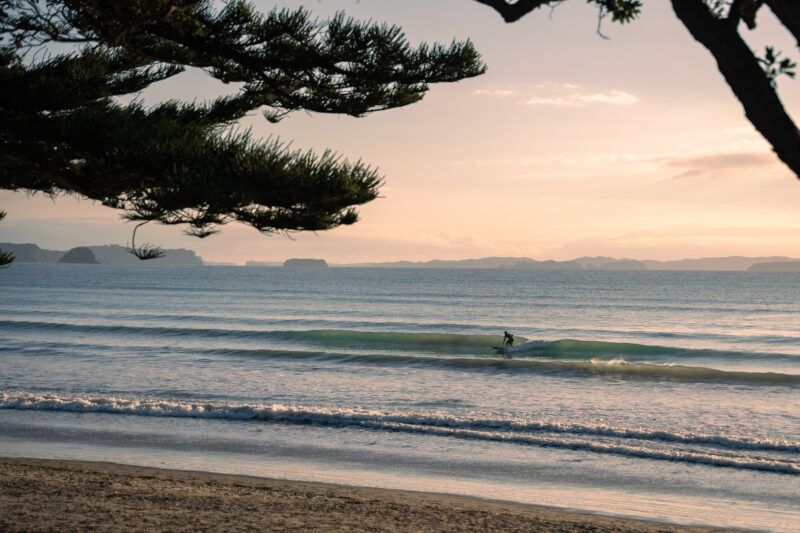
Northland (Ahipara, Shipwreck Bay, Far North Beaches)
Warm climate, mellow points, long peeling lefts, and stunning remote beaches make the Northland Region a renowned surfing destination in New Zealand. Shipwreck Bay is the jewel of this area, famous for its long, consistent left hand point breaks and considered one of the best breaks in the country.
Auckland West Coast (Piha, Muriwai, Bethells)
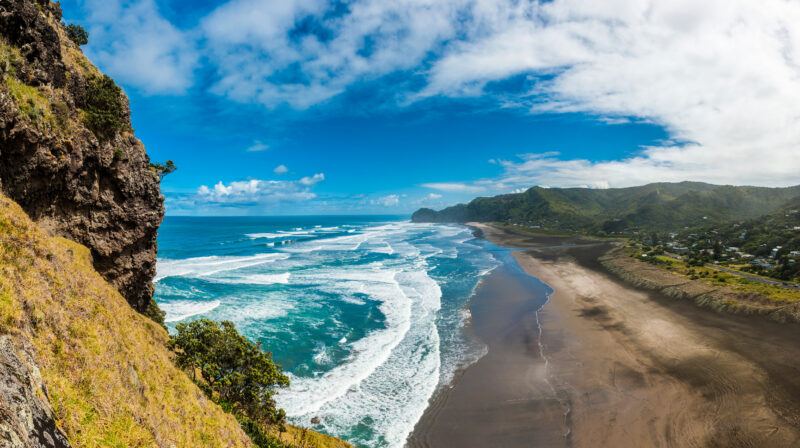
Heavy, powerful, black-sand beach breaks backed by dramatic sea cliffs. Piha Beach is home to several surf schools, making it a great spot for learning to surf.
Auckland East Coast (Orewa, Mangawhai, Tawharanui)
More sheltered and beginner-friendly with clean summer walls.
Coromandel Peninsula (Whangamatā, Pauanui, Hot Water Beach)
Tropical-feeling bays, sand-bottom peaks, and pointbreak perfection. Whangamatā Bar is renowned for its long, peeling left-handers, and the northern end of the beach is particularly popular for its quality waves.
Bay of Plenty (Mount Maunganui, Matakana Island)
Warm water, mellow waves, and longboard-friendly beaches.
Gisborne (Wainui, Sponge Bay, Makorori)
Gisborne is a small town on the eastern side of the North Island and is one of NZ’s most consistent surf zones with reefs, points, and barrels. Wainui Beach, just outside Gisborne, is famous for its quality waves and reef breaks, including some of Gisborne’s longest tubes. The best waves and reef breaks here are enhanced by big southerly swells, making it a top spot for surfers seeking powerful, rippable surf.
Hawke’s Bay (Wairākei, Māhanga)
Less consistent but delivers beautiful, uncrowded waves.
Taranaki (Surf Highway 45, Stent Road)
A legendary west coast region with world-class right-hand points. Taranaki is also renowned for its long, consistent left-hand point breaks, which are considered among the best in the world and attract experienced surfers and longboarders alike.
Kapiti & Wellington Region
Windy but fun when it lines up — strong local surf culture.
Canterbury (New Brighton, Sumner, Taylors Mistake)
Accessible city surf with sandy beaches and strong winter swell.
Christchurch Airport provides convenient access to the Canterbury surf region.
Otago (Dunedin, St Clair, Blackhead)
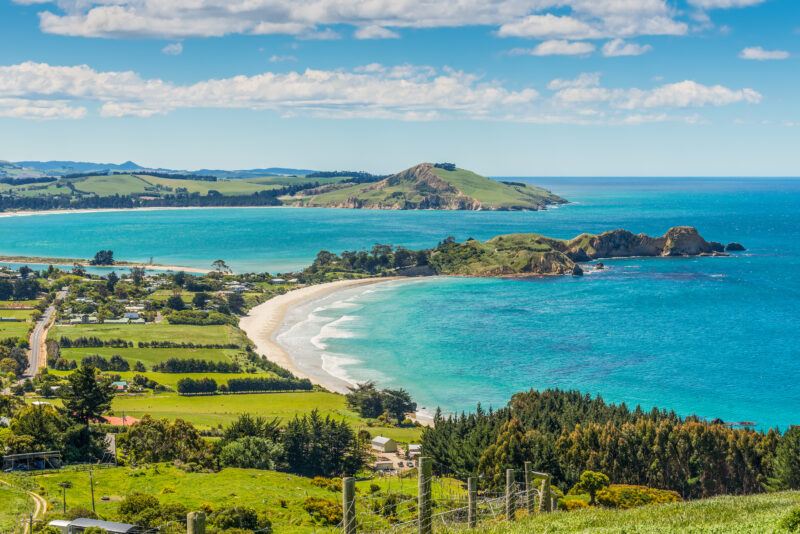
One of the most wave-rich cold-water surf zones in the world — powerful, consistent, raw.
Southland (Invercargill, Riverton)
A dreamy, icy, uncrowded coastline with long peeling points.
Getting there
Getting There and Access
New Zealand is driven by car. Fly into:
- Auckland (AKL)
- Wellington (WLG)
- Christchurch (CHC)
- Dunedin (DUD)
Cook Strait is the main maritime route connecting the North and South Islands, and is often used by surfers traveling between regions.
Coastal highways connect most surf regions. 4×4 needed for remote west coast river-mouths and gravel roads. Plenty of public carparks, beach tracks, and lookout pull-offs.
Crowds
Northland: light
Auckland West: heavy on weekends
Auckland East: moderate
Coromandel: moderate
Gisborne: moderate to heavy
Bay of Plenty: light to moderate
Taranaki: moderate
Dunedin: moderate
Southland: very light
Crowds are nowhere near Australian levels (except Piha), but talent runs deep.
Lineup Lowdown
Kiwi surfers value respect, courtesy, and humility.
Follow the code:
- Don’t paddle straight to the inside
- Don’t drop in
- Respect Māori land and local communities
- Keep beaches clean and quiet
- Let the older chargers set the tone
- Share the stoke — Kiwi surf culture is friendly
- Know your limits on heavy west coast days
Spirit of the lineup: respectful, nature-focused, unpretentious.
Surf seasons and when to go
The best time of the year to surf in New Zealand
Surf Seasons and When to Go
Summer (December–February)
Warm water in the North
Playful surf
East coast peaks
Perfect for beginners and longboarders
Cyclone swells = magic events
In New Zealand, the summer months run from December through March, bringing warm water and more consistent, mellow surf conditions.
Autumn (March–May)
The best season
Clean offshore mornings
Consistent swell
Balanced winds
Warm days, cool nights
Perfect for Taranaki and Gisborne
Winter (June–August)
Big swells
Coldest water
Powerful beach breaks
West coast heavy days
South Island at its best
Only for committed surfers
During winter, New Zealand surf is defined by big swells generated by low pressure systems in the Southern Ocean, bringing powerful waves to many breaks.
Spring (September–November)
Mixed winds
Building swell
Clear, crisp days
Fun for intermediates
Best overall: Autumn
Best for beginners: Summer
Best for advanced surfers: Winter + heavy west coast days
Water Temperatures and Weather
Northland: 18–22°C
Auckland: 16–21°C
Coromandel/BOP: 17–22°C
Gisborne: 15–20°C
Taranaki: 14–19°C
Canterbury: 10–18°C
Otago: 9–16°C
Southland: 8–15°C
You’ll need:
North Island summer: 2/2 or 3/2
North Island winter: 3/2 or 4/3
South Island year-round: 4/3 or 5/4 with booties + hood
Weather changes FAST — storms, fog, offshore blasts, and clean windows all in one day.
Can’t-Miss Surf Spots
Northland
Shipwreck Bay (Ahipara)
One of NZ’s longest left-hand pointbreaks. Long, dreamy walls that peel for hundreds of metres on solid southwest swell. A must-surf when pumping. The area is a classic sleepy town, perfect for surfers seeking tranquility and uncrowded waves.
Taupo Bay
Beautiful, uncrowded beach with fun peaks for all levels. This sleepy town offers a peaceful atmosphere, making it ideal for those looking to escape the crowds and enjoy scenic beauty.
Auckland West Coast
Piha
The most famous surf beach in NZ. Black sand, powerful rips, punchy peaks, and dramatic cliffs. Great waves but can be heavy and crowded.
Muriwai
Long, exposed beachbreak with consistent surf and strong westerly swell.
Bethells Beach
Raw, wild, beautiful, and powerful. Best for experienced surfers.
Auckland East Coast
The Auckland East Coast offers a range of wave types suitable for different surfing experiences.
Mangawhai Heads
A fun right-hand point with playful walls, offering both peaky beach breaks and point break wave types. Great for intermediates and longboarders.
Orewa
A mellow longboard-friendly beach with soft, rolling wave types that works best with windswell.
Tawharanui
A protected, scenic beach featuring glassy walls and consistent beach break wave types on light-wind mornings.
Coromandel Peninsula
Whangamatā Bar
One of the best right-hand sandbar points in NZ. Long, peeling walls perfect for performance surfing. Whangamatā Bar is widely regarded as one of the best breaks in the country.
Hot Water Beach
A powerful, hollow beach break with heavy peaks. Advanced surfers only.
Pauanui
A mellow, cruisy beach good for learning and fun sessions.
Bay of Plenty
Mount Maunganui (The Mount)
A beginner-to-intermediate haven with fun, user-friendly peaks.
Matakana Island
Remote-feeling beach with long, clean walls accessible by boat or long paddle.
Gisborne
Wainui Beach
One of NZ’s most consistent and beloved surf beaches. Punchy peaks, reef sections, and clean walls. The best waves and reef breaks here are enhanced by big southerly swells.
Sponge Bay
Point-style wave with fast right-hand walls. Great for advanced surfers.
Makorori Point
Long peeling rights that line up perfectly on northeast swell.
Taranaki (Surf Highway 45)
Stent Road
World-class right-hand pointbreak with long, powerful walls. The wave quality here is shaped by a prominent rocky reef, which influences both the length and power of the ride. NZ’s answer to J-Bay.
Kumara Patch
Heavy, hollow reef waves for advanced surfers. The presence of a rocky reef at this spot creates challenging and unique wave formations.
Arawhata Road
Fun, playful point-style waves with a friendly lineup.
Wellington Region
Lyall Bay
The city’s main surf beach — fun, wind-affected, and super community-driven.
Canterbury
Sumner
Beginner-friendly beach close to Christchurch.
Taylors Mistake
A more powerful, punchy beach break with fun sections.
Otago
St Clair
A lively, consistent beach break with bars, cafes, and great surf culture.
Blackhead
A powerful reef with hollow sections and big swell potential.
Brighton Beach
Fun, rippable peaks with fewer crowds.
Southland
Riverton Rocks
A long, peeling left point that lines up beautifully on southwest swell. Cold but dreamy.
Colac Bay
Friendly, mellow waves for intermediates and longboarders.

New Zealand surf travel guide
Find trips that fit a flexible lifestyle
Learning to Surf in New Zealand

Best beginner regions:
- Mount Maunganui
- Sumner
- Orewa
- Mangawhai
- Pipa
- Whangamatā (small days)
- St Clair (small days)
Lessons: AU$40–100
Board hire: AU$20–50/day
Safety and Etiquette

- West coast rips are no joke
- Rocks + reefs throughout Taranaki and Otago
- Cold-water risks in the south
- Localism at a few high-end points
- Drive carefully on coastal roads
- Don’t leave valuables in carparks
- Respect local communities + Māori land
- Know tides — many NZ waves are tide-sensitive
- Always check surf conditions before heading out, using apps or local surf reports for up-to-date information
Awareness is everything in NZ surf.
Surf and Yoga Retreats
Popular zones:
- Gisborne
- Coromandel
- Northland
- Taranaki
- Otago
Retreats include:
- Surf coaching
- Yoga + breathwork
- Nature hikes
- Cold-water therapy
- Māori cultural education
- Wellness meals
- Photography + video analysis
Prices: AU$800–3,000
Accommodation Options for Surfers
Backpacker hostels: AU$25–60
Holiday parks: AU$20–50
Motels: AU$80–150
Beachfront Airbnbs: AU$120–350
Boutique lodges: AU$200–600
Eco-retreats: AU$200–700
Taranaki, Gisborne, and Dunedin offer great surf-budget variety.
Comparison to Other Surf Destinations
NZ vs Australia:
- Colder water
- Less crowded
- More dramatic scenery
- Shorter swell windows
NZ vs Hawaii:
- Less powerful
- Colder
- More variety in short distances
- No crowds compared to Oahu
NZ vs Indonesia:
- Way colder
- Less perfect
- More diverse coastlines
- Fewer crowds
NZ vs California:
- Cleaner nature
- Heavier beach breaks
- More empty space
NZ vs Central America:
- Cooler climate
- More variety in wave types
- Fewer crowds compared to popular Central American spots
New Zealand is a surf adventure dream.
Expenses (AUD)
Board hire: AU$20–50
Lessons: AU$40–100
Meals: AU$10–25
Fuel: AU$2.50–3.20/L
Accommodation: AU$25–700
Wetsuit: essential in south
NZ is mid-priced but fuel adds up on road trips.
The official currency is the New Zealand Dollar (NZD), which is important for travelers budgeting their surf trip.
Cultural Notes
Expect:
- Friendly locals
- Māori cultural presence
- Fresh seafood
- Relaxed surf communities
- Respect-based etiquette
- Big road-trip energy
- Clean, cared-for beaches
- Sheep. Everywhere.
Kiwi surf culture is grounded, humble, and deeply nature-driven.
Cell Coverage & Wi-Fi
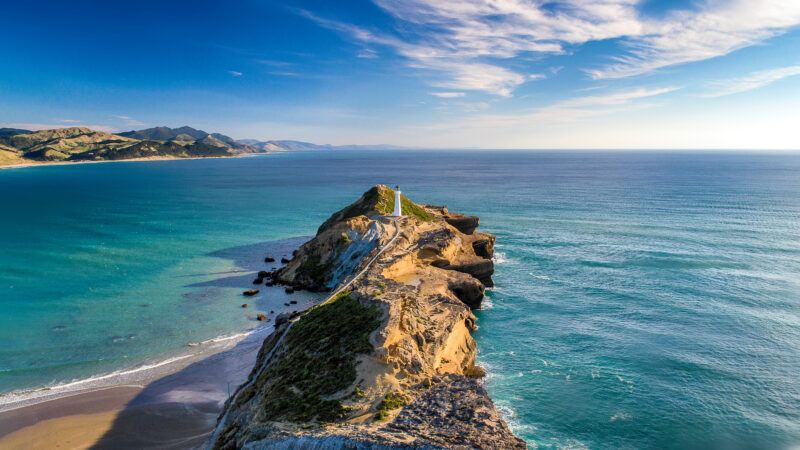
Strong in cities
Patchy in rural coasts
Weak in deep west coast corners
Holiday parks and cafés provide Wi-Fi
Final Thoughts
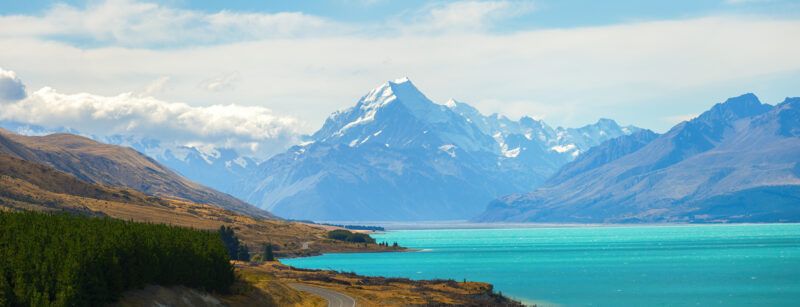
It’s a land built for surf road trips: long winding highways, empty beaches, surf checks from hilltops, steaming geothermal baths after sessions, penguins in the south, dolphins in the north, fjords, forests, and peaks.
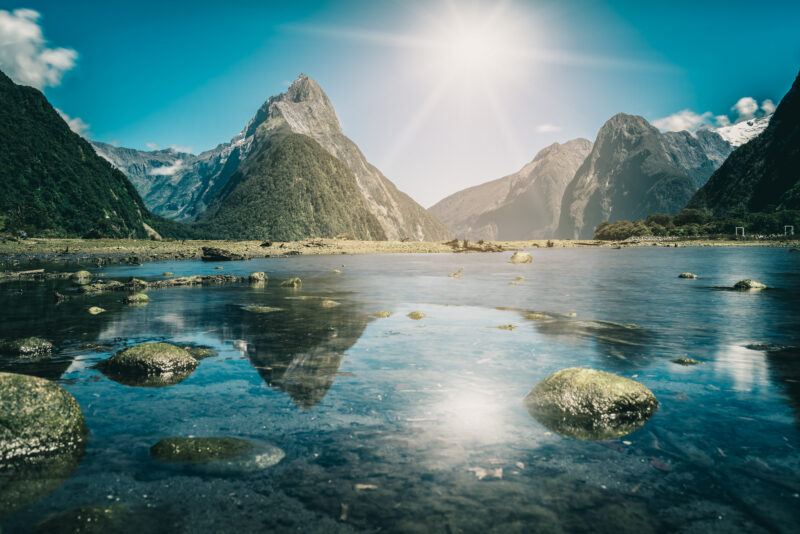
A surf trip in New Zealand can be planned as a two week trip, taking in legendary surf spots like Manu Bay and Whale Bay near Raglan—Manu Bay is famous for its long, barreling left-hand point break, while Whale Bay is ideal for longboarders and beginners. Beyond surfing, you can explore the dramatic scenery of Milford Sound, a must-see fjord on the South Island, where whale watching tours are a highlight. For adventure seekers, Queenstown offers bungee jumping, and mountain biking is popular throughout the country’s scenic landscapes.
NZ is surfing with soul, nature, and pure wild energy. A destination every surfer should experience at least once.